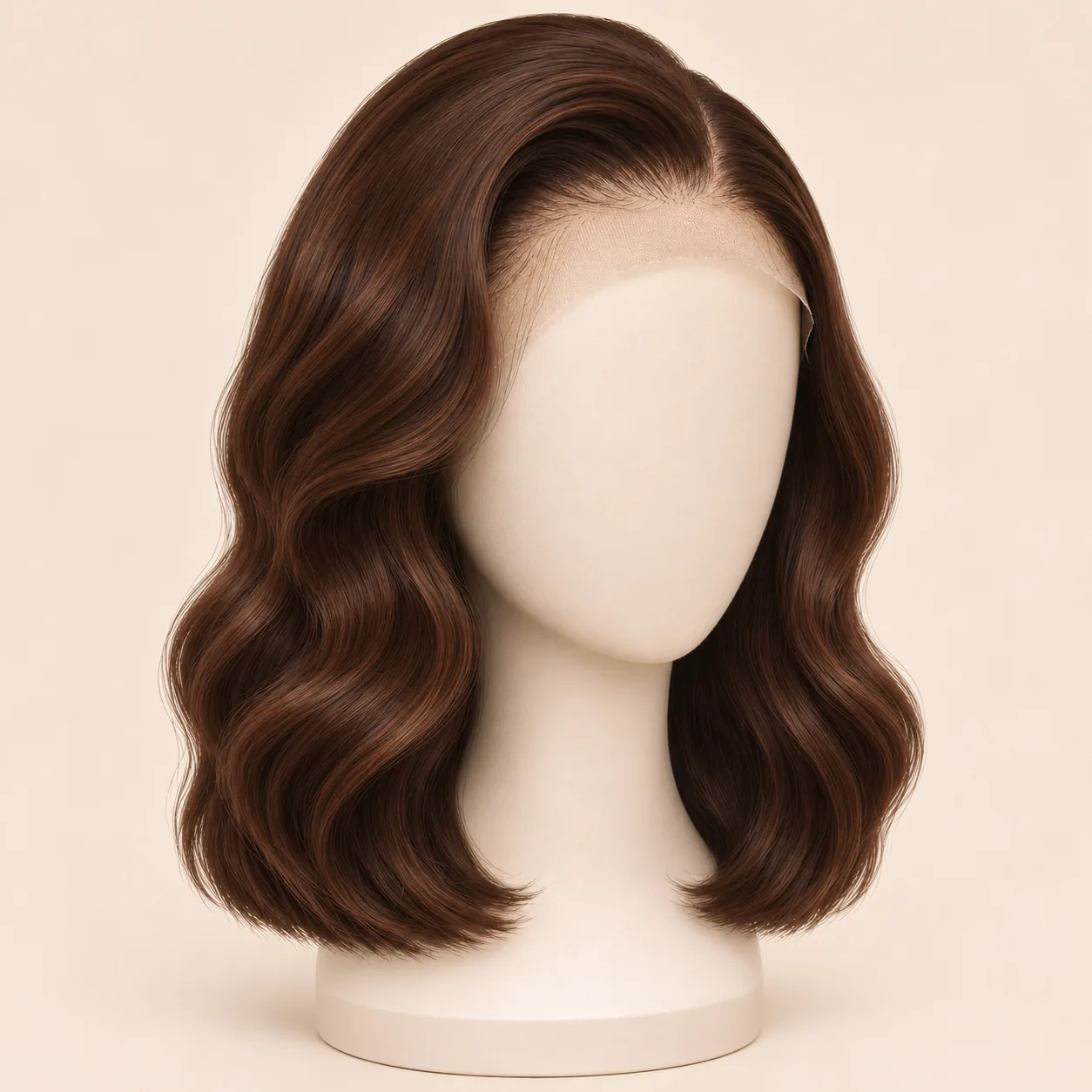
A wig sourced from a single photo is a guess. Every style we source starts as a one-page purchasing brief: the reference image and eight fields, each marked agreed or open. This article goes through that brief: what each field holds, what we can and cannot read from your images, how to fill the open fields, how versions work, and how the same page is used to check the sample and place the reorder. It is written for boutiques, custom wig studios, distributors and brands sending their first custom human hair wig inquiry.
The eight fields on a purchasing brief
One style, one page. At the top: your business name, the style name, the version number and a note on what changed in that version. Below: the reference image and eight fields.
- Target style, with a line underneath for the hair target: the texture, shine and feel you want, in your own words.
- Hairline, written on two lines: the front edge and the nape edge. See natural hairline wigs.
- Parting: where it sits and how it falls.
- Cap construction: lace front, full lace and so on. See full lace wigs and HD lace vs Swiss lace.
- Colour, written as root, dimension and ends, with the tone in your words underneath.
- Length: for curls, worn length and stretched length on separate lines.
- Density, which can be written by zone: front, crown, ends.
- Cap size, which also covers how the back of the cap fits.
Every field is marked agreed or open. The same page is used for the inquiry, the sample, the order and the reorder, so nothing has to be described twice.
What we read from your reference images, and what stays open
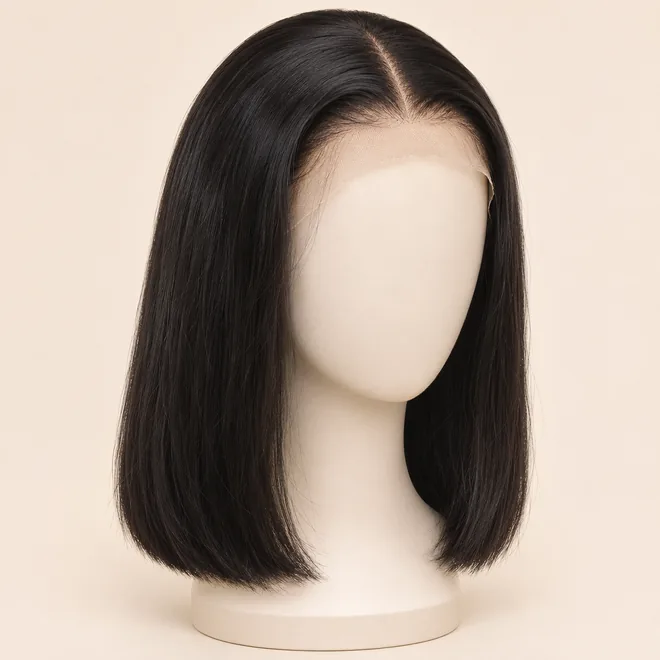
When your images arrive, we fill in every field we can read from them. Fields we cannot read are marked open, with a note saying what we need from you. Three come up again and again:
- Colour under a filter. A retouched or filtered photo does not show the real colour, so colour stays open.
- The inside of the cap. A photo of a worn wig does not show the cap construction.
- Length hidden by styling. An updo or a heavy curl hides the real length.
If you send several images, we read them together and note on the brief which image each field was taken from. Cap size is marked open in the first version unless you give it to us. If you already sell a wig you want us to match, photos of it (front, side, parting, inside of the cap) are read into the matching fields in the same way.
Filling the open fields
An open field is not a problem. It is the list of what we still need. Colour can be filled in four ways:
- an unretouched photo, taken by a window in natural light, out of direct sun, with indoor lights off and no flash;
- a physical colour swatch or a hair sample you already sell;
- a wig from your current stock;
- a written description by root, mid-lengths and ends.
Colour is never set from a retouched image alone. More on this in custom colour wigs.
You can also leave a field open for us to propose. We write the proposal into that field and mark it as our proposal. The brief always shows which fields came from you and which are our proposals. A proposal only becomes part of the approved brief once you confirm it on the sample.
No sample is started while a field is still open with nothing written in it, from you or from us.
Versions: every change is written back
Every change produces a new version of the brief (v1, v2 and so on), and the version note says which field changed. Older versions are kept. Anything agreed on the phone, in a chat or on WhatsApp is written back into the brief as a new version, and every message about a style names its brief and version. The version you confirm is the one the sample is made from.
Use your own words for the parts of a wig. If your team calls the edge of the lace something else, that is the word on your brief. Tell us who on your side confirms versions; anyone on your team can send images or answer open fields. You can start with the custom wig order form, which builds a requirement summary in the same field order before you send it.
Checking the sample against the brief
The sample is checked field by field against the confirmed version. Each field is marked matches or needs change. A field that needs change goes into a new version of the brief, and a revised sample is made from it.
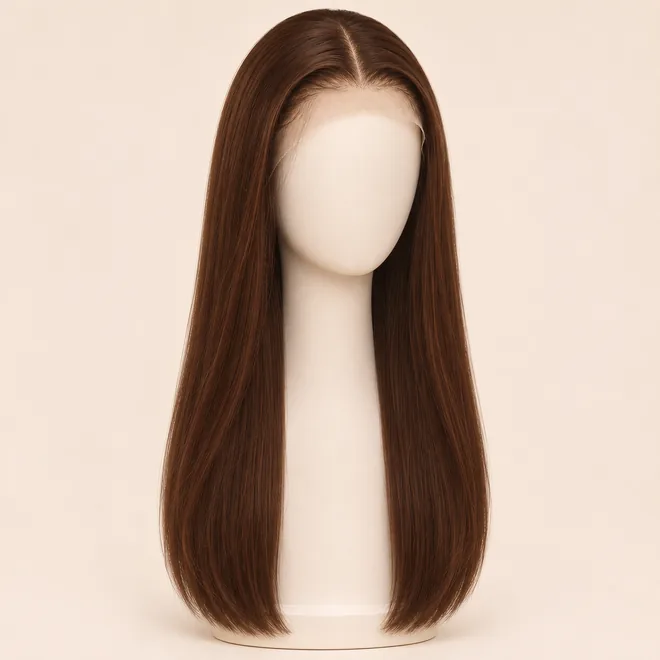
Quality here means what can be checked on the sample, and every check links back to a field: strand close-ups in daylight at the root, mid-lengths and ends; texture, shine and feel against the hair target; colour against your colour inputs; density by zone; hairline, parting and cap fit against their fields. See human hair wig quality for the full list. At the end of the sample stage you hold two documents: the approved brief and the field-by-field check sheet.
After approval: orders and reorders by brief
Once you approve the sample, that version is marked approved brief. Bulk orders and reorders are made from it. A reorder only needs the brief name and version. Changing only the quantity is not a change to the brief, so no new version is needed. Changing any field is a new version and needs a new sample. A variation of an approved style is its own version, and you can keep ordering both.
All your briefs, old versions included, are filed under your business name and style name, and you can ask for a copy at any time. Boutiques and distributors can group them by store, client or product line (wholesale for boutiques). Brands planning a line get one approved brief per brand style (start a wig brand), and new styles developed from reference images follow the same eight fields (ODM wig development).
Prices, minimum order, timing and shipping are not published on the site. They are written per style in our reply to your inquiry. Replies come in English or French.